
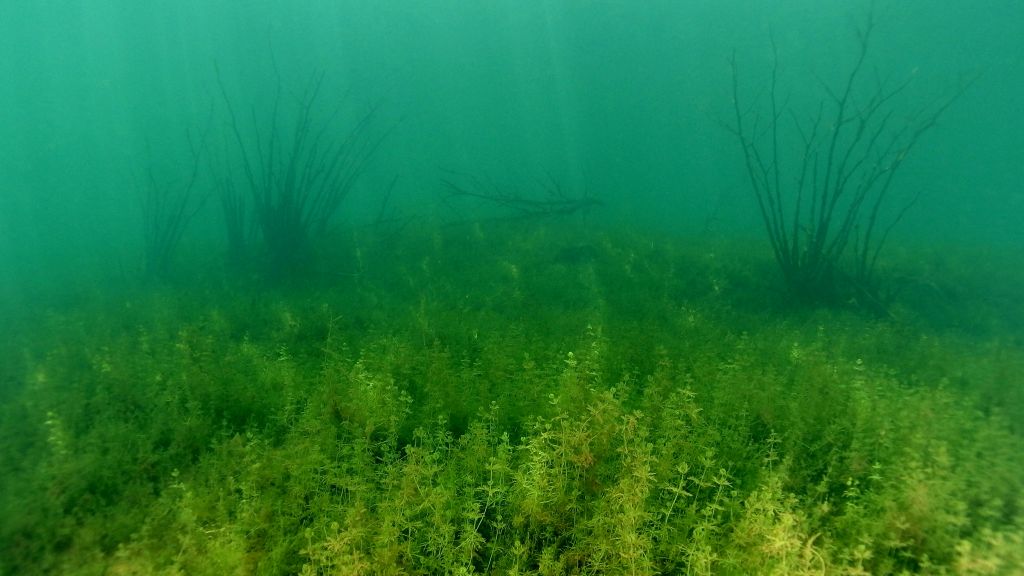
Medard Lake is located in the western part of the Czech Republic and covers approximately 490 hectares, with a maximum depth of 50 m. The lake represents a unique long-term ecological research area (LTER) for studying ecological processes and ecosystem development in a large, restored lentic ecosystem. Its characteristics and long-term monitoring provide an important basis for understanding the ecological development of restored lakes and the interactions between biological communities and environmental conditions.
Research at Medard Lake focuses on a broad range of ecological processes, including the effects of intra- and interspecific interactions on fish community succession, the impacts of anthropogenic activities and long-term environmental changes on water quality, and the influence of submerged macrophytes on trophic relationships and fish distribution in deep lakes. Further research addresses the composition of periphyton and the structure and biomass of phytoplankton, providing insights into the functioning and trophic dynamics of the lake ecosystem.
Despite its restored status, Medard Lake faces ongoing ecological pressures and changes in trophic conditions. These include eutrophication and alterations in the structure of the trophic web, including a decline in the biomass of piscivorous fish. Climate-related changes are adding further pressure, with longer periods of high temperatures contributing to the potential occurrence of cyanobacterial (blue-green algae) blooms and lower water levels. These changes can affect water quality, food-web dynamics and the overall ecological functioning of the lake.
In addition to its ecological and scientific value, Medard Lake is becoming an important recreational resource, supporting tourism, water sports and recreational fishing. Maintaining a balance between recreational use and the ecological functioning of the lake is therefore an important aspect of its long-term management.
Management efforts focus on maintaining a low nutrient load and supporting a typologically appropriate fish community, with a high proportion of predatory fish species. These measures aim to maintain favourable trophic conditions, support balanced food-web interactions and contribute to the long-term ecological stability of the lake.